


Do Forged Wheels Improve Tesla Range? What Philippine EV Owners Should Know

Range anxiety is a real part of owning a Tesla in the Philippines. The charging infrastructure is improving steadily, with Ayala's ACMobility targeting more than 700 charging points across the country by end of 2025, but the gaps still exist. For most Tesla owners in Metro Manila and surrounding provinces, managing range per charge is something you think about, even if only occasionally.
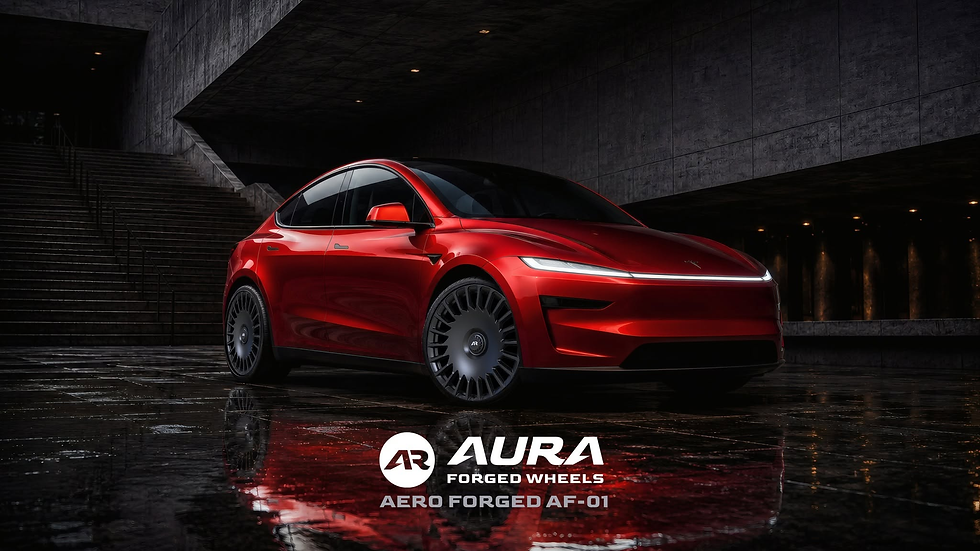
Against that backdrop, questions about whether aftermarket upgrades can meaningfully improve range are worth taking seriously. Forged wheels are often mentioned in this context, and the claims range from precise engineering explanations to vague marketing language about "efficiency." The truth is more specific than either extreme, and this article sets out what the engineering actually supports.
To be direct from the start: forged wheels can contribute to modest efficiency improvements on a Tesla, through two mechanisms: reduced rotational mass and, in aerodynamically optimised designs, reduced drag at the wheel face. The gains are real but not large. Whether they are meaningful in the Philippine context depends on how you drive and where.
Key Takeaways
Forged wheels contribute to EV range through two measurable mechanisms: lower rotational mass and aerodynamic design, where applicable.
The rotational inertia effect means heavier wheels consume more energy with every acceleration cycle; this compounds over daily driving.
Aerodynamically optimised forged wheel designs reduce drag at the wheel opening, which has a measurable efficiency effect at highway speeds above 80 km/h.
The Tesla Model Y (2020+) fits 19x9.5" ET33 or 20x9.5" ET33; the Model 3 (2017+) fits 18x8.5" ET23 through 20x9.5" ET29, depending on configuration.
Staying with the correct offset and tyre sizing preserves Tesla's energy management calibration; incorrect fitment can offset any efficiency gain.
The range contribution of forged wheels is genuine but modest; structural benefits under Philippine road conditions are the stronger practical argument for the upgrade.
Table of Contents
How Wheel Weight Affects EV Range
Wheel weight affects EV range through the principle of rotational inertia: heavier rotating masses require more energy to accelerate, and that energy cost repeats with every acceleration cycle throughout a drive.
When a car accelerates from a standstill, the engine or motor does not just have to push the mass of the vehicle forward. It also has to spin every wheel up to the corresponding road speed. This rotational acceleration requires energy proportional to both the mass and the radius of the rotating component. A wheel that is 1.5 kg lighter than its equivalent does not just reduce the total weight of the car by 1.5 kg. It also reduces the rotational inertia that must be overcome with every departure from rest.
On a petrol car with an engine producing several hundred Newton-meters of torque, this effect is present but absorbed within the broader inefficiency of combustion. On an EV, every watt consumed comes directly from the battery. The relationship is direct: more energy spent accelerating the wheel mass means fewer watt-hours available for forward motion. Over a commute involving dozens of stop-start cycles, the difference between a heavier cast wheel and a lighter forged equivalent becomes a small but consistent drain on the battery.
A forged wheel that is 1.5 to 2 kg lighter per corner than a cast equivalent reduces unsprung rotational mass by 6 to 8 kg across the vehicle. This does not dramatically extend your range in a single charge, but it is a genuine contribution to efficiency that accumulates over daily use. The effect is more noticeable in stop-start urban driving, which describes most of Metro Manila, than on open highway sections.
For a more detailed explanation of how unsprung mass interacts with real driving performance on an EV, the Aura Forged article on unsprung weight and performance covers this with appropriate technical grounding.
What Aerodynamic Design Does at the Wheel Face
Aerodynamically optimised forged wheel designs reduce drag at the wheel opening, contributing to range at highway speeds through a measurable reduction in turbulent airflow.
The wheel well of any car is one of the less aerodynamically efficient areas of the vehicle. Air enters the wheel arch opening and interacts with the rotating wheel and tyre, creating turbulence and drag. The shape of the wheel face, meaning the spoke geometry and how open or closed the design is, directly influences how air moves through and around this area.
A conventional open-spoke wheel allows relatively unrestricted airflow through the wheel face, which increases turbulent drag, particularly at speeds above 80 km/h. A semi-closed or turbine-inspired wheel design guides incoming air more smoothly, reducing the turbulence that creates aerodynamic resistance.
This is the engineering principle behind the Aura Forged Aero-Forged Series, which was designed specifically for EV platforms. The turbine-inspired surface geometry is not a styling choice; it reflects an intentional approach to managing the airflow entering the wheel arch. At the speeds typical of Philippine expressway driving, where many Tesla owners regularly travel between 100 and 120 km/h, the drag reduction from this kind of design has a direct efficiency consequence.
The Aero-Forged approach also addresses the cooling balance that closed-face wheels can compromise. A fully closed wheel reduces aerodynamic drag but restricts airflow to the brake disc. The Aero-Forged design uses precision ventilation channels within the semi-closed face to maintain brake cooling while preserving aerodynamic efficiency. This is a relevant consideration for Philippine driving conditions, where stop-start traffic followed by expressway sections means brakes cycle between high and moderate thermal loads throughout a typical journey.
What the Numbers Realistically Look Like
The efficiency contribution of forged wheels on a Tesla is genuine, but it is important to set realistic expectations rather than overstate the case.
Range improvement from wheel upgrades is not a transformation. It is one of several factors in the total efficiency equation of an EV, alongside driving speed, HVAC usage, tyre pressure, road surface, ambient temperature, and driving style. Each factor contributes a fraction of the overall energy consumption picture.
Independent EV testing published by sources including academic and manufacturer research has generally shown aerodynamic wheel improvements contributing in the range of 0.5 to 3 percent efficiency gain at highway speeds, depending on the design and speed tested. At lower urban speeds, the aerodynamic benefit is smaller; the rotational inertia benefit is more prominent in stop-start conditions.
For a Tesla Model Y Long Range with a rated range of approximately 533 km (WLTP), a 1 to 2 percent improvement represents 5 to 11 km of additional range per charge under favorable conditions. This is not the difference between reaching your destination and stopping for a charge. But it is a real number, and it compounds across hundreds of charging cycles over the ownership life of the vehicle.
The more substantial case for forged wheels on a Tesla in the Philippines is structural, not range-driven. Lighter, stronger wheels that handle Philippine road conditions with greater structural integrity are the primary argument. The efficiency contribution is a genuine secondary benefit, not the headline.
Thinking about the upgrade for your Tesla?
We can confirm the correct fitment spec for your Model Y or Model 3 before you commit to anything. No obligation, direct response from the team. Message us on WhatsApp or submit a fitment request here.
Why Tyre Choice Within the Fitment Spec Matters Too
The tyre fitted to the wheel has as much influence on range efficiency as the wheel itself, and the two decisions should be made together.
A wider tyre increases the contact patch with the road, which improves lateral grip but also increases rolling resistance. Rolling resistance is one of the most direct contributors to range consumption on an EV. A tyre that is 10mm wider than necessary for your use case will measurably consume more energy per kilometer than a correctly sized option.
Within the fitment specifications for both the Model Y and Model 3, there is often a primary recommended tyre size and an alternative. The primary recommendation typically prioritizes efficiency and range; the alternative provides slightly more grip at the cost of some rolling resistance. For daily Philippine driving, which involves a mix of urban traffic and expressway sections rather than track use, staying with the primary tyre size recommendation preserves the range efficiency the upgrade is intended to support.
For the Model Y at 19x9.5" ET33, the primary tyre recommendation is 255/45-19. The 265/45-19 alternative fits directly but adds 10mm of width. For the Model 3 OEM-plus configurations, 235/45-18 and 235/40-19 are the efficiency-oriented recommendations at 18-inch and 19-inch respectively.
Understanding how tyre size, width, and construction interact with wheel efficiency is covered in more detail in the Aura Forged guide on offset and fitment fundamentals.
Correct Fitment Keeps the Efficiency Gain Intact
An incorrectly fitted wheel, regardless of how light or aerodynamically optimised it is, will not deliver the efficiency improvement it is capable of, and may introduce new problems.
If the offset of the wheel places it significantly further outward than the factory specification, the tyre may contact the inner fender under load or full steering lock. This creates friction that directly consumes energy. It can also increase tyre wear rate and introduce noise that was not present before. Neither outcome supports range efficiency.
If the wheel is not hub-centric, meaning the center bore is larger than Tesla's 64.1mm and no hub-centric rings were fitted, the wheel is centered by the wheel bolts rather than the hub. This introduces a small but measurable runout at road speed, which creates vibration and uneven load distribution on the tyre. Both reduce efficiency and comfort over time.
Staying within the confirmed fitment specifications for your Tesla variant, at the correct offset, with the right center bore confirmation and appropriate tyre sizing, is what allows the structural and efficiency benefits of a forged wheel to function as intended. This is why the fitment conversation should come before the purchase decision, not after.
Tesla Model Y and Model 3 Fitment Reference for the Philippines
The fitment specifications below are sourced from verified fitment data and are specific to the Model Y (2020+) and Model 3 (2017+).
Tesla Model Y Fitment
Size | Offset | Config | Primary Tyre | Alternative Tyre | Notes |
19x9.5" | ET33 | Square | 255/45-19 | 265/45-19 | Direct fit. Sits 12mm further out than factory dual motor AWD wheels. |
20x9.5" | ET33 | Square | 255/40-20 | 265/40-20 | Direct fit. |
Tesla Model 3 Fitment
Size | Offset | Config | Primary Tyre | Notes |
18x8.5" | ET23 | Square | 235/45-18 | Direct fit. Best for efficiency and range. |
19x8.5" | ET23 | Square | 235/40-19 | Direct fit. Strong range efficiency balance. |
19x9" | ET34 | Square | 255/40-19 | Centering rings required. |
18x9.5" | ET29 | Square | 265/40-18 | Direct fit. Performance setup. |
19x9.5" | ET29 | Square | 265/35-19 | Direct fit. 3mm spacer may be needed with some tyres on Performance variant. |
20x9.5" | ET29 | Square | 265/30-20 | Direct fit. Performance setup. |
For the complete cluster of fitment information, including structural considerations and the full engineering case for forged wheels on Tesla platforms, see the complete Tesla forged wheel fitment guide for the Philippines.
For the broader engineering argument about why the structure of a forged wheel matters for EV owners specifically, the Aura Forged article on forged wheels for BYD and Tesla EVs is a useful companion read.
Frequently Asked Questions
Do forged wheels actually improve Tesla range?
Forged wheels can improve Tesla range modestly through two mechanisms: lower rotational mass reduces energy per acceleration cycle, and aerodynamically optimised designs reduce drag above 80 km/h. The gain is real but not large, typically contributing 1 to 2 percent in favorable conditions.
Which wheel size is best for Tesla Model Y range in the Philippines?
19x9.5" ET33 with 255/45-19 tyres gives the best balance of efficiency, ride compliance, and direct fitment for Philippine conditions. The taller sidewall improves rolling over road irregularities without adding rolling resistance.
Does wheel size affect Tesla range significantly?
Larger diameter wheels generally require lower profile tyres, which increases rolling resistance slightly. Moving from 18-inch to 20-inch on the same vehicle typically has a small negative effect on range unless offset by lighter wheel weight and aerodynamic design.
Can the wrong offset affect Tesla range or efficiency?
Yes. An incorrect offset can cause tyre contact with the inner fender under load, creating friction that consumes energy. It also affects bearing load distribution, which increases rolling resistance over time.
What is the difference between the Aero-Forged and Precision Series for Tesla?
The Aero-Forged Series is designed specifically for EV platforms with turbine-inspired faces that manage wheel arch airflow. The Precision Series focuses on structural performance and handling balance. Both are forged from 6061-T6 aluminium with full certification. For Tesla EV range considerations, the Aero-Forged design has a more direct aerodynamic relevance.
Confirm Your Fitment Before You Commit
The efficiency case for forged wheels on a Tesla in the Philippines is grounded in engineering, not marketing language. The rotational mass reduction is real. The aerodynamic benefit at expressway speeds is measurable. The structural advantage on Philippine roads is the most immediately practical argument of the three.
What matters most is that the wheel you choose is correctly specified for your Tesla variant, properly certified, and fitted at the right offset and tyre sizing to let all of those properties work as intended.
Aura Forged provides fitment consultation as a first step, before any order is placed. The conversation is about your specific car, your driving patterns, and your priorities, not about closing a sale.
Submit a fitment request or reach us on WhatsApp. You can also explore the Aero-Forged Series and the Precision Series to understand which engineering approach suits your Tesla build.
About the Author
Brinal Chua is the founder of Aura Forged and brings more than 30 years of automotive brand management experience across Southeast Asia. He built Aura Forged on the conviction that engineered precision should not require premium brand markups, and that every wheel should earn its place on the car it is fitted to. Learn more at brinal.co.
References
The Manila Times: How 2025 Became the Breakout Year for EVs in the Philippines - Source for Philippine EV market context and ACMobility charging infrastructure targets.
Zigwheels Philippines: Tesla PH Sales Data - Source for Tesla Philippines unit sales through October 2025.
Rappler: Tesla Philippines Pricing and Entry - Source for Tesla Model Y and Model 3 official Philippine pricing and market entry details.


Comments