


What Philippine SUV Owners Should Know Before Upgrading Their Wheels

I have spent three decades managing automotive brands across Southeast Asia. In that time, I have seen the same pattern repeat: owners put considerable thought and money into what they put on their vehicles, but the wheel, despite being the one component that connects everything to the road, often gets the least rigorous consideration.

In the Philippines specifically, that gap has consequences. The roads here are genuinely variable in ways that most wheel specifications do not account for. The vehicles in the mid-size body-on-frame SUV segment, the Fortuner, Montero Sport, Everest, MU-X, are used aggressively and loaded confidently. The combination creates conditions where wheel selection deserves more than a visual decision.
This article is not about selling you a particular wheel. It is about giving you the framework to make a better decision, whether you are upgrading to forged, staying with cast, or simply replacing OEM stock.
For the fitment specifications, see our Philippine SUV wheel fitment guide. For the engineering reasoning behind forged construction, read why forged construction matters for Philippine SUV owners. This article addresses the road conditions, use patterns, and buyer considerations specific to the Philippine market.
Key Takeaways
Philippine road conditions combine urban infrastructure with rural and provincial surfaces of widely varying quality, creating a higher-frequency and more varied stress profile for wheels than most specification sheets assume.
A fully loaded 7-seat SUV in the Philippines can approach or exceed its gross vehicle weight rating; load ratings should reflect that reality.
Typhoon and monsoon season regularly damages road surfaces in ways that create sudden severe impacts on vehicles traveling at normal speeds.
The 4x4 sub-segment, led by the Ford Everest according to Zigwheels Philippines, serves buyers who explicitly value off-road capability, making structural wheel quality a more active purchasing consideration.
Wheel selection should be based on honest assessment of actual use, not aspirational or lightest-use scenarios.
Table of Contents
How Philippine Roads Actually Stress SUV Wheels
Road quality in the Philippines is not a single condition. It is a spectrum that a single vehicle might travel across in one day. Metro Manila roads, particularly in older districts and lower-class roads, carry a high density of potholes, expansion joints, and patched surfaces. National highways are generally better but still subject to heavy truck damage, subsidence, and storm-related surface deterioration. Provincial and municipal roads vary enormously, from reasonably maintained concrete sections to unpaved barangay tracks.
The stress this creates for a wheel is not primarily one large event. It is a pattern of accumulated impacts, vibrations, and lateral loads across thousands of kilometers. A wheel encounters this stress asymmetrically, meaning one corner may absorb a far greater impact than another, and the impacts are unpredictable in their timing and severity.
This is the condition that makes the structural properties of a wheel, particularly its fatigue resistance and impact behavior, practically relevant rather than theoretical. We covered the engineering behind this in why forged construction matters for Philippine SUV owners, but the practical takeaway here is that the Philippine road environment asks more of a wheel than most design specifications assume for their expected use case.
The Payload Reality: Loading Habits and GVW
Filipino SUV owners load their vehicles. This is not a criticism; it is an observation about how these vehicles are actually used, and it has structural implications.
A Toyota Fortuner with seven passengers, luggage, and additional cargo can operate at or very close to its gross vehicle weight rating. The same is true for the Mitsubishi Montero Sport and the Isuzu MU-X. According to the Manila Bulletin, 10,687 Montero Sports were sold in the Philippines in 2024, a model known for its use as a family carrier for multi-hour provincial drives fully loaded.
The wheel's load rating specifies the maximum weight the wheel is designed to support in service. Most buyers do not check this number against their actual operating weight; they assume the OEM wheel is adequate and that any quality aftermarket option will be equally so. That assumption is generally reasonable for light-use scenarios, but it can become a gap when the vehicle is regularly operated near its maximum load, particularly on roads that add significant dynamic load on top of the static weight.
A practical rule: identify the heaviest realistic configuration your SUV operates in (full passenger load, luggage, roof box or tow bar if applicable), compare that total against your wheel's certified load rating, and verify that the rating provides an adequate margin. Our article on understanding load ratings for SUVs and trucks walks through how to read and apply this specification.
Typhoon Season and What It Does to Road Surfaces
The Philippines experiences an average of 20 typhoons per year, according to the Philippine Atmospheric, Geophysical and Astronomical Services Administration (PAGASA). The road damage that follows typhoon and monsoon events is one of the less-discussed factors in SUV wheel selection, but it is directly relevant.
Standing water conceals road surface damage. Flooded roads that appear passable can contain significant potholes, subsidence, or displaced paving beneath the surface. A vehicle traveling at even moderate speed through a flooded section and hitting a concealed pothole can deliver a sharp, high-force impact to the wheel with no warning. This is the specific scenario where the difference between a wheel that deforms and one that fractures is most consequential, particularly for vehicles carrying passengers in areas where roadside assistance may not be immediately available.
This is not a reason to avoid driving in the wet season. It is a reason to factor impact resilience into wheel selection as a real operational variable, not an edge case.
The 4x4 Segment and What It Demands
The Ford Everest dominates the 4x4 sub-segment of the Philippine midsize SUV market, according to Zigwheels Philippines. The Isuzu MU-X 4x4, Fortuner 4x4, and Montero Sport 4WD round out the key players. Buyers who choose 4x4 variants are explicitly purchasing off-road capability, and a meaningful portion of them use it.
For vehicles that go off-tarmac with any regularity, the structural demands on the wheel extend beyond road-going fatigue. Lateral loads during off-road traversal, rock or obstacle contact, and extended low-speed loaded driving over uneven terrain all place different stress patterns on the wheel than highway driving. These are conditions where the combination of load capacity, fatigue resistance, and impact behavior, the three areas where forged construction provides structural advantages over cast, become simultaneously relevant.
It is worth being clear: you do not need a forged wheel to go off-road. What forged construction provides is a wider structural margin under those conditions, which translates into reduced risk of failure over the life of the wheel.
Urban to Provincial: The Mixed-Use Pattern
Perhaps the most accurate description of how Philippine mid-size SUVs are actually used is: mixed, unpredictably, and often near capacity. The same vehicle handles EDSA traffic on weekdays, a Tagaytay weekend drive, a quarterly Bicol or Visayas family trip, and occasionally a post-typhoon provincial run that tests every component on the vehicle.
This mixed-use pattern is important for wheel selection because it means the wheel needs to be adequate for the most demanding scenario in its owner's life, not just the average one. A wheel that performs acceptably in Metro Manila use may not have the structural margin needed for a loaded, high-impact provincial run.
The honest pre-purchase question is: what is the most demanding realistic thing I will put this vehicle and these wheels through? The answer to that question, rather than the average-use scenario, is the right benchmark for wheel selection.
What to Prioritize When Choosing a Wheel
Based on the Philippine operating context, here is a grounded priority order:
Priority | What to check | Why it matters in the Philippines |
1 | Correct fitment: PCD, offset, center bore | Foundation; no structural quality compensates for a misfit wheel |
2 | Load rating vs actual operating weight | Filipino loading habits mean GVW proximity is common |
3 | Impact behavior (forged vs cast) | Concealed road damage and rough provincial surfaces |
4 | Fatigue resistance | High-mileage, mixed-condition use over multi-year ownership |
5 | Certification (JWL + VIA preferred over JWL alone) | Distinguishes independently verified from self-declared quality |
6 | Finish durability | Humid, coastal, and high-UV environment affects long-term appearance |
For a quick decision framework: if the vehicle is used primarily in Metro Manila with light loads and rarely leaves well-maintained roads, a quality cast wheel with correct fitment and JWL certification is a reasonable choice. If the vehicle regularly carries heavy loads across variable terrain, the case for forged construction with VIA and IATF 16949 certification strengthens meaningfully.
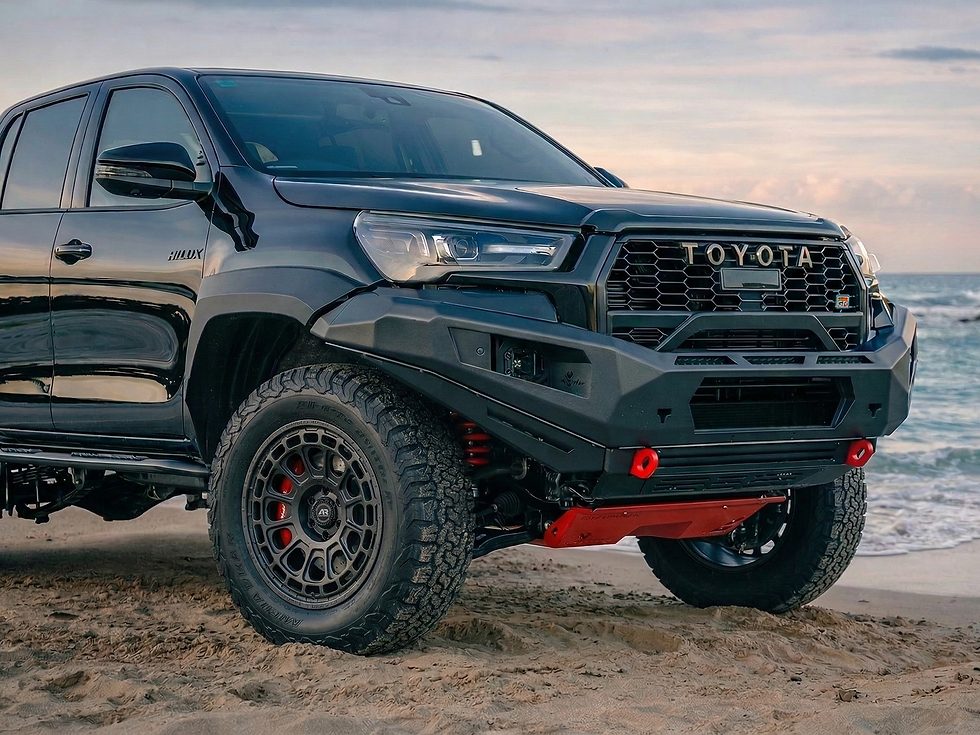
The Aura Dakar Series is built for exactly the operating profile described above: SUVs across Southeast Asian road conditions, with forged construction, verified certifications, and fitment options covering the major Philippine-market models. Reach us on WhatsApp if you want a direct fitment confirmation for your vehicle.
Frequently Asked Questions
Why do Philippine roads specifically make wheel construction more relevant than in some other markets?
The combination of variable surface quality, frequent severe weather events, and typical loading habits creates conditions where a wheel's fatigue resistance and impact behavior are regularly tested. Markets with more uniform road quality and lower payload use put less structural demand on the wheel over its life. The Philippine context sits at a higher point on that demand scale, which is why the structural advantages of forged construction translate more directly into practical value here.
Is a 7-seat SUV loaded with seven passengers actually close to its GVW?
Yes, for several of the models in this segment. A typical mid-size body-on-frame SUV has a GVW of around 2,500 to 2,800kg, and a kerb weight of around 1,800 to 2,000kg. Seven passengers at an average of 65–70kg each plus luggage can account for 550 to 700kg of additional load, which in many configurations leaves the vehicle within a few hundred kilograms of its GVW. Add a roof rack, a canopy, or a tow bar load, and the margin narrows further.
Should I wait for road conditions to improve before upgrading, or upgrade now?
Road conditions in the Philippines are being continuously improved, but the variable quality of provincial and secondary roads is a long-term structural reality rather than a temporary situation. Upgrading now with an appropriate wheel for current conditions is the more practical approach.
Does driving in floodwater regularly affect wheel condition?
Prolonged exposure to standing water, particularly if it contains sediment or corrosive materials from flooding, can affect wheel finishes over time. The structural aluminum is generally resistant to corrosion, but surface coatings can degrade with sustained exposure to contaminated floodwater. Regular cleaning and inspection after flood exposure is practical maintenance. Structurally, a well-made alloy wheel is not damaged by occasional flood crossing at appropriate depths; the concern is gradual surface degradation rather than immediate structural compromise.
How do I know if a wheel's load rating is genuinely certified or just a marketing claim?
Wheels carrying JWL markings should be traceable, and VIA-verified wheels have undergone independent third-party testing. IATF 16949 certification applies to the facility and can be verified through the certification body. If a supplier cannot provide documentation supporting the certifications claimed on a wheel, that is worth treating as a red flag. Our article on wheel certifications and what they actually mean covers how to evaluate these claims.
Looking to upgrade your Fortuner, Montero Sport, Everest, or MU-X? Browse the Aura Dakar Series, message us on WhatsApp, or reach us through the contact page.
References
Manila Bulletin (2025, February 10). Fortuner and Montero Sport not in 2024 top 10 best-sellers? mb.com.ph
PAGASA (Philippine Atmospheric, Geophysical and Astronomical Services Administration). Climate of the Philippines. pagasa.dost.gov.ph
Zigwheels Philippines. Best SUV Cars in the Philippines. zigwheels.ph/new-cars/best-suv
Focus2Move (2025). Philippines Vehicles Market – Facts & Data 2024. focus2move.com/philippines-vehicles-market-2024/
Wheel-Size.com (2026). Toyota Fortuner fitment database. wheel-size.com/size/toyota/fortuner/


Comments